“One afternoon in January 1995, as I drove along Western Avenue, I did what I had never done before: i parked the car in a side-street and walked on to the road…”
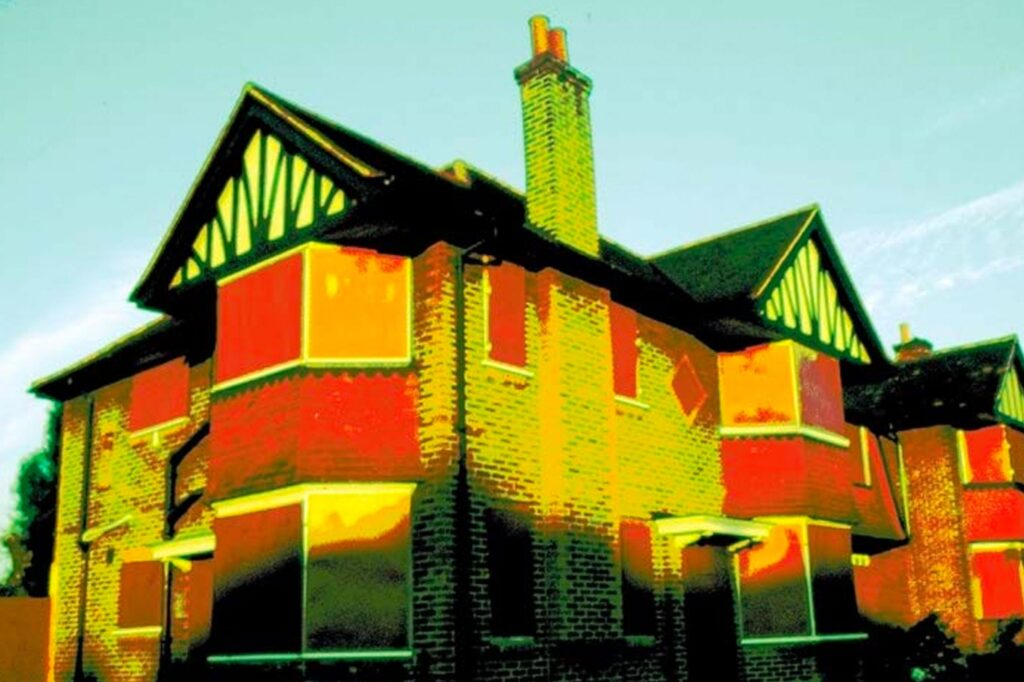
In Leadville, Ed Platt tells the story of Western Avenue from the optimism of its construction in the 1920s to its partial demolition seventy years later. It is a tale of the city and the traffic, of suburbia and the dreams of its inhabitants, and of our senseless and all-consuming love affair with the motor car.
The Great Flood dramatizes the experience of being flooded and considers what will happen as the planet warms and the waters rise, illuminating the reality behind the statistics and headlines that we all too often ignore.

“We all live in Leadville now.”Paul Collins, The Believer
“endlessly entertaining – an original talent and an excellent book.”Norman Lewis
“it seems likely that in a century or so almost all of England will be like this – congested, polluted, anarchic. Though its geographical focus is small, Leadville is a book with big resonances.”John Carey, The Unexpected Professor
“… one of my favourite books. Platt took the most apparently unpromising subject imaginable – the Western Avenue stretch of the A40 – and made it a reflection on human yearning… An unobtrusive and empathetic interviewer, Platt talked to the remaining residents, a varied, characterful crew of stoics, outsiders and eccentrics. The result is fascinating and moving.”Lucy Lethbridge, The Oldie
“Leadville examines the impact of place and planning on a series of lives, and the idea of suburbia, with a compassion and a lack of assumed grandeur that made me reflect rather more sourly on a bunch of subsequent “psychogeographical” writing.”Peter Robins, The Guardian
“… a fascinating and exquisitely written “biography” of the Western Avenue… Platt is such a virtuoso in his handling of what might otherwise be dross, that he has made a riveting tale out of nothing more than the stuff of small lives… In each and every one of the people he meets he manages to draw out something of their inner life, and this illuminates the page. Through careful marshalling of fine physical detail – what Tom Wolfe called “status life” – and an eschewing of “analysis” for deadly accurate recording of what he sees and hears, he has created a drama that is not only Orwellian in its attention to what you might call the state of the nation (for this community feels very much like a microcosm of a certain slice of modern Britain) but almost Dickensian in the recording of the colour and pathos of its inhabitants…. “
With quiet exposition rather than polemic, Platt gently burrows beneath the surface of lives threatened and trimmed by larger forces than themselves, and lays out his findings to the reader with an elegance and intelligence that takes the book beyond journalism and into the realms of literature.”Tim Lott, The Times
“Western Avenue emerges from the book not just as an isolated disaster-area but as a microcosm of modern England, congested, polluted, mismanaged, and fixated on the past. It is also a story about the end of the automobile age. Interspersed among the oral history are sections on discredited 20th-century utopians – Le Corbusier, who wanted to rebuild the world’s cities to accommodate the car, Robert Moses who designed New York’s parkways, only to see them become clogged with traffic. The lesson is that the car, a beautiful, irresistible, man-made parasite, has proved more destructive of human habitats than any plague in history. Its increase has been epidemic, as Platt notes: 50m cars in the world in 1950, 350m by 1980, 500m now. By keeping his work on a human scale, Platt brings home the true meaning of these unimaginable statistics. Lively, trenchant, fair-minded, sad, funny, his book should be bought by every thinking motorist.”John Carey, The Sunday Times
“While his excellent new book Leadville is subtitled A Biography of the A40, its subject is not the strip of strengthened tarmac that ferries drivers out of west London to the bright lights of Oxford and beyond, but the houses and inhabitants on its easternmost edge… he was written the story of a street.”Adam Macqueen, The Big Issue
“Now we have Leadville … breathing flesh and blood into surely the most depressing four miles of tarmac in England … Mr Platt is much attracted to the bleakest stretch, from White City to Hangar lane. He invests it with the human drama of a Cairo or a Bombay. He is a reporter of fearless imagination … Mr Platt can see the Mona Lisa in a fish wrapping… A traffic jam need not be an ulcerating bind. It can be a geographical and sociological adventure. If I cannot drive though English countryside, Mr Platt shows that even the dreariest suburban landscape has its charm.”Simon Jenkins, The Times
“… compassionate and oddly beautiful… Platt is concerned almost exclusively with the few miles of the A40 between White City and Hanger Lane. He charts its history and the lives of its inhabitants from the glory and optimism of its construction as the suburbs were created, in the 1920s and 1930s, providing Lloyd George’s “homes for heroes”, to the present time as houses are destroyed to make way for a road-widening scheme. Platt provides us with a microscopic view of the failures of planning, the rise and demise of the suburban dream, the death of community, and the shift in the south-east’s economic landscape from industry to retail…”Julian Keeling, New Statesman
“Dereliction gives a futuristic, post-apocalyptic air, and the bizarre combination of bailiff’s grilles and former tweeness makes the area look like an Ealing films version of Bladerunner…. Three of the great false dawns of the 20th century – suburbia, modernism and the automobile – are mocked in all their deficiencies in that short stretch between the Westway and Gipsy Corner.”Chris Petit, The Guardian
“The real value of Leadville lies on a personal level. Platt … is very good at describing the sudden beauty of overgrown back gardens or the bleakness of the 10-lane blacktop at night. The capital he uncovers… is both cosmopolitan and cussed.”Mark Sanderson, Evening Standard
“The elegantly sassy pages of Leadville encapsulate the lives of sweated Britannia… admirable.”Christopher Hawtree, The Independent
“… a book that moves from the richly comic to the near tragic, lifting the lid on people’s lives – and belatedly giving them a voice of their own… engaging and original.”Clare Colvin, The Sunday Express
“Platt’s own descriptions are quietly memorable: traffic blurs like a “melted sweet”, and the book seems to swelter in the hot stillness of the air, laced with petrol, dust, dope or Guinness, brewing in a near-by factory… Platt realises in time that people can survive, and even perversely thrive, in the most anonymous, bedraggled of neighbourhoods, and he is cheered “that Western Avenue sometimes seems a better place than I have ever allowed it to be.” That it will also seem so to the reader is very much testament to Edward Platt’s bedside manner, masking a quietly searching intelligence, and expressed in restrained, sympathetic writing, which, in finding the voice of the suburbs, introduces his own.”David Vincent, Times Literary Supplement
“…a compelling story, peopled by hundreds of bizarre and baffling characters… Like the much-lamented Tony Parker – who also realised that Britain offers richer rewards for the truly curious writer than any number of distant lands – Platt rejoices in finding people who have refused to allow their characters to be usurped by their environment. He has an acute nose for eccentrics… a rare and pleasing mixture of diatribe and elegy… Platt has penned a brilliant dispatch from a modern British battlefield.”Craig Brown, Mail on Sunday
“As an interviewer, he is both empathetic and sympathetic, and he writes with great care, sensitivity and imagination … an important and highly readable addition to the literature of London.”Nicholas Royle, Time Out
“In its modest way, this book is a report from a war zone. It deals with one battle, on the outskirts of London, between people and cars; but because we are all caught up in the same fight, it has a universal rather than a merely local significance… [a] brilliant, sad, disconcerting little book.”Anne Chisholm, Sunday Telegraph
“the book has been deservedly praised for its Dickensian evocation of forgotten lives… some authors will always go their own way, and like Platt will avoid genres new and newly fashionable. Leadville has no unlikely forgotten genius at its heart. It doesn’t even press to a narrative climax. Instead Platt has produced a book that Orwell would recognise and salute, that manages to nail our collective confusion about the contemporary state of things every bit as incisively as Naomi Klein’s No Logo… If [Dave] Eggers has taken the Egotistical Experimental Sublime to its exhilarating and exasperating conclusion, it seems to me that Edward Platt’s work, equally hard to categorise, is just as profound. And as a model for furture experiments, it has much to recommend it.”Julian Loose, The Guardian
“[an] ambitious and challenging plan to revive George Orwell’s search for ‘the future England’ along ‘the arterial roads’… a compelling narrative of daily life, the sheer oddness of which is eloquent of our social and human condition…”Michael Bracewell, Frieze
“exquisitely written”Zadie Smith, Observer Books of the Year
“A small, gritty, monoxide-scented epic.”Peter Conrad, Observer Books of the Year
“weird and wonderful”Selina Hastings, Sunday Telegraph, Books of the Year
“My Book of the Year is Leadville by Edward Platt. I found it hard to believe it possible that anyone could make a funny and moving – often gripping book about one of the nastiest stretches of a semi-suburban road in England. But Edward Platt has done that with the A40 out of London. He has made an almost Doomsday survey of the wildly assorted types who live and breathe (as best they can) along its verges. There are condemned houses, houseproud houses, squatters’ houses, people who would rather be anywhere in the world but there, and people who cannot imagine wanting to live anywhere else.
This entire miscellany of human types seems to have been talked into talking freely to the author. He does not judge, he listens. Readers are by turns amused, horrified, admiring or sympathetic. It is a social history of the most entertaining sort.”Matthew Parris
“This is a book that has obviously been long in the making, and the work has paid off: here we have portraits of a particularly odd set of Londoners, existing within the pleats of the city in the kind of places you pass and think, “Good God, if I lived there I think I’d kill myself.” There is a novelistic quality to the book, not only in its central conceit but in the way it follows some of its characters around; yet for a novel to contain both retired policemen and itinerant squatters would demand a level of contrivance Platt can forego. The road becomes a revealing core sample of late 20th-century urban society, with commentary from Le Corbusier’s insane dreams for modern Paris and the history of the A40 itself thrown in.
Most welcome of all, we learn very little indeed about Edward Platt, except that he lives in Shepherd’s Bush, was not born in London, and has an execrable car; and that he is patient and sensitive to the details of others’ lives – and can write.”Nicholas Lezard, The Guardian, Paperback of the Week
“An absorbing and pungent book about the A40… a memorable dispatch from the battlefront.”Arnold Kemp, TheObserver, Paperback of the Week
“Leadville is a great read: a gripping, amusing profile of three and a half miles of tarmac, from White City to Hangar Lane… It is really a travel book, and Platt is an excellent travel writer: curious yet unobtrusive, letting his subjects speak for themselves…. Platt, delightfully, begins to lose himself in the project, until we hear the rattle of the obsessive in his voice.”Olivia Glazebrook, The Daily Telegraph
“Uplifting and poignant, this book will stay with you.”Christopher Hirst, The Independent
“Despite its apparently parochial subject matter, Leadville has had an ecstatic reception from the critics.“The Week – Book of the Week